Advanced Deep Plane Facelift Center of Excellence Expands Focus to Revision Facelift Surgery
PR Newswire
ATLANTA, Oct. 6, 2026
Atlanta facial plastic surgeon Dr. Benjamin Stong and the Advanced Deep Plane Facelift Center of Excellence highlight a structural approach to revision facelift surgery using the KalosLift Advanced Deep Plane Facelift for patients who have previously undergone traditional, SMAS, mini, neck lift, or deep plane facelift procedures.
ATLANTA, Oct. 6, 2026 /PRNewswire/ -- Facial plastic surgeon Dr. Benjamin C. Stong, founder of Kalos Facial Plastic Surgery and the Advanced Deep Plane Facelift Center of Excellence in Atlanta, is expanding the Center's focus on advanced structural facial rejuvenation to include complex revision facelift surgery.
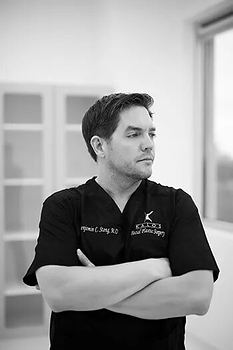
Revision facelift surgery presents unique challenges because previous surgery can alter normal facial anatomy, create scar tissue, change tissue planes, and modify the SMAS, platysma, facial retaining ligaments, and other structures involved in facial support.
Dr. Stong performs revision facelift surgery for patients who have previously undergone a wide range of procedures, including traditional facelifts, SMAS facelifts, mini facelifts, neck lifts, and deep plane facelifts. Regardless of the technique used during the patient's original procedure, Dr. Stong uses his KalosLift Advanced Deep Plane Facelift as the foundation for revision surgery.
"Revision facelift surgery is not simply a matter of tightening the face again," says Dr. Stong. "You have to understand what was done during the previous operation, how it changed the anatomy, and which structural problems remain. I use the KalosLift Advanced Deep Plane Facelift for revision surgery because it allows me to comprehensively release, mobilize, reposition, and support the deeper facial structures."
Why Revision Facelift Surgery Is Different
A primary facelift is performed on anatomy that has not previously undergone facelift surgery. Revision surgery requires the surgeon to work with tissues that may have been dissected, tightened, repositioned, scarred, or otherwise altered during the original procedure.
Previous surgery can affect incision placement, normal anatomical planes, SMAS mobility, facial ligament release, midface position, platysma anatomy, jawline and neck contour, and the fixation points used to support repositioned tissues.
For this reason, Dr. Stong begins revision planning by evaluating the patient's existing facial anatomy and determining how the previous surgery affected the underlying facial support system.
Although the anatomical problems differ from patient to patient, Dr. Stong consistently uses the KalosLift Advanced Deep Plane Facelift as the structural foundation for revision surgery.
Revising Traditional, SMAS, Mini and Deep Plane Facelifts
Patients seeking revision facelift surgery may have undergone substantially different procedures during their original operations.
Some traditional facelift techniques primarily address skin laxity. Other procedures use SMAS plication or imbrication to tighten the deeper facial tissues. Mini facelifts may involve more limited dissection and repositioning, while deep plane facelifts release and reposition deeper facial structures.
Dr. Stong also performs revision surgery for patients who have previously undergone deep plane facelift procedures.
The term "deep plane facelift" can encompass significant differences in the extent of ligament release, SMAS mobilization, midface elevation, neck treatment, direction of repositioning, and methods of fixation. As a result, a previous operation described as a deep plane facelift may differ substantially from the techniques incorporated into Dr. Stong's KalosLift Advanced Deep Plane Facelift.
"The name of the previous facelift tells you only part of the story," says Dr. Stong. "What matters in revision surgery is what was actually done anatomically, what structural concerns remain, and what needs to be corrected."
Why Dr. Stong Uses the KalosLift for Revision Facelift Surgery
Dr. Stong uses the KalosLift Advanced Deep Plane Facelift for revision surgery because it provides a comprehensive structural approach to the cheeks, midface, jawline, and neck.
The technique builds upon deep plane facelift principles through extensive release and mobilization of the deeper facial support structures. It incorporates comprehensive SMAS mobilization, extended midface elevation, structural SMAS fixation, and advanced platysma and neck work to address the interconnected anatomy of the face and neck.
This comprehensive approach is particularly relevant in revision surgery, where additional skin tightening or limited modification of previously operated soft tissues may not address the underlying structural concerns.
Rather than selecting a different facelift technique based on the type of original surgery, Dr. Stong customizes the KalosLift according to the anatomical changes and concerns identified in each revision patient.
Advanced Midface Elevation and Natural Cheek Repositioning
An important component of the KalosLift is extensive release and repositioning of the midface.
Vertical midface elevation can restore support to tissues that have descended with age or were not adequately addressed during a previous facelift. Elevating the midface also supports the cheek-eyelid junction and can improve lower eyelid height, hollowing, and the transition between the lower eyelid and cheek.
More extensive SMAS mobilization allows controlled temporolateral repositioning of the patient's own soft tissues over the cheekbone. This restores natural cheekbone definition and improves midface volume distribution using the patient's own tissues rather than relying on implants, fat transfer, or injectable fillers for cheek enhancement.
For revision patients, this approach can be particularly important when a previous operation concentrated primarily on lateral tightening or the lower face without adequately restoring midface support.
SMAS Periosteal Fixation for Structural Support
Another defining component of Dr. Stong's KalosLift is SMAS periosteal fixation.
The SMAS, or superficial musculoaponeurotic system, is a deeper structural layer that plays an important role in supporting the facial soft tissues. Many facelift procedures reposition the SMAS using SMAS-to-SMAS plication or imbrication.
Dr. Stong's technique instead incorporates fixation of the repositioned SMAS to periosteum, the strong connective tissue layer covering the facial bones. Fixation points along stable skeletal structures, including the zygoma, or cheekbone, and mastoid region behind the ear, provide structural anchors for the repositioned facial tissues.
Because periosteum remains relatively stable compared with facial soft tissues that descend with age, Dr. Stong uses these fixation points to provide structural support for the repositioned SMAS.
This approach can be particularly relevant during revision surgery when the SMAS and surrounding soft tissues have already been manipulated during a previous facelift.
Advanced Neck Correction in Revision Facelift Surgery
The jawline and neck are common areas of concern among patients seeking revision facelift surgery.
Dr. Stong's KalosLift approach connects the sub-SMAS dissection of the face with the neck and incorporates complete medial and lateral platysma elevation, allowing the cheeks, jawline, and neck to be treated as an interconnected structural system.
His advanced neck technique also uses extended myotomies and platysmaplasty techniques to redistribute tension within the platysma and improve control of the cervicomental angle, helping create a sharper jawline and more refined neck contour.
This more extensive mobilization allows Dr. Stong to address neck concerns structurally rather than relying primarily on additional skin tightening or limited midline platysma correction.
Advanced Recovery Following Revision Facelift Surgery
The Advanced Deep Plane Facelift Center of Excellence also incorporates structured postoperative care into its revision facelift program.
Because revision surgery involves tissues that have previously been operated on and may contain scar tissue or altered anatomy, postoperative management is an important component of Dr. Stong's approach.
Medical-grade hyperbaric oxygen therapy is incorporated into Dr. Stong's postoperative recovery protocol for revision facelift patients to support healing and postoperative recovery. Unlike lower-pressure systems marketed primarily for wellness purposes, the Center uses medical-grade hyperbaric oxygen delivered in a certified chamber at therapeutic pressure levels.
Dr. Stong's academic work has also included published research involving perioperative hyperbaric oxygen therapy in facelift patients.
Advanced Deep Plane Facelift Center of Excellence
Dr. Stong founded the Advanced Deep Plane Facelift Center of Excellence at Kalos Facial Plastic Surgery in Atlanta to focus on advancing structural approaches to facial rejuvenation.
The Center's approach incorporates extensive SMAS and facial ligament release, vertical midface elevation, comprehensive SMAS repositioning, SMAS periosteal fixation, advanced platysma elevation, extended myotomies, comprehensive neck rejuvenation, and structured postoperative recovery protocols.
The Center's focus on revision facelift surgery applies these advanced structural techniques to the additional challenges presented by patients whose facial anatomy has already been altered by previous facelift surgery.
"Revision surgery requires you to understand both the patient's current anatomy and the operation that came before it," says Dr. Stong. "The goal is not simply to redo a facelift. It is to identify the structural deficiencies that remain and use the KalosLift to restore facial support, balance, and natural contours."
Serving Revision Facelift Patients Traveling to Atlanta
Kalos Facial Plastic Surgery treats patients traveling to Atlanta from across the United States and internationally for primary and revision facial rejuvenation procedures.
The practice provides support for out-of-town revision facelift patients, including consultation coordination, surgical planning, and postoperative recovery guidance. Virtual consultations are also available for patients considering traveling to Atlanta for revision facelift surgery.
More About Dr. Benjamin Stong and Kalos Facial Plastic Surgery:
Dr. Benjamin C. Stong is a dual board-certified facial plastic surgeon with over a decade of experience. He graduated at the top of his class from Emory University and earned his medical degree from the University of Alabama School of Medicine. Dr. Stong completed his residency at the Emory Department of Otolaryngology Head and Neck Surgery and his fellowship in Facial Plastic and Reconstructive Surgery in New York under Dr. Andrew Jacono. He has been consecutively named a Castle Connolly Top Doctor and proudly displays the ABFPRS diplomate logo, representing the highest level of specialization in facial plastic surgery. Dr. Stong is committed to humanitarian efforts, serving on the national Face to Face committee against domestic violence, partnering with the Partnership Against Domestic Violence of Atlanta, and traveling abroad to provide free cleft lip and palate surgery to children through the Faces of Honor program for veterans. Kalos Facial Plastic Surgery is located in the heart of Buckhead at 371 East Paces Ferry Rd, Suite 850, Atlanta, GA 30305. For more information or to schedule a consultation, please visit www.kalos-plasticsurgery.com or call (404) 963-6665.
Media Contact
Dr. Benjamin Stong
Kalos Facial Plastic Surgery
(404) 963-6665
https://www.kalos-plasticsurgery.com

 View original content to download multimedia:https://www.prnewswire.com/news-releases/advanced-deep-plane-facelift-center-of-excellence-expands-focus-to-revision-facelift-surgery-302890026.html
SOURCE Kalos Facial Plastic Surgery, LLC

