From K-Drama to Second-City Sakura: How Travellers are Rethinking Cherry Blossom Season in 2026
PR Newswire
SINGAPORE, March 18, 2026
- Kamakura and Enoshima amongst destinations growing in popularity due to Netflix inspiration
- One-third of sakura seekers now head beyond the "Golden Route" of Tokyo, Kyoto and Osaka
- South Korea and China rise as alternative cherry blossom destinations, rank among the top five globally for related searches
SINGAPORE, March 18, 2026 /PRNewswire/ -- Cherry blossom season is entering a new era. In 2026, sakura seekers are rethinking where and how they experience the iconic pink blooms, moving away from the usual hotspots in favour of media-inspired and quieter, culturally immersive spots.
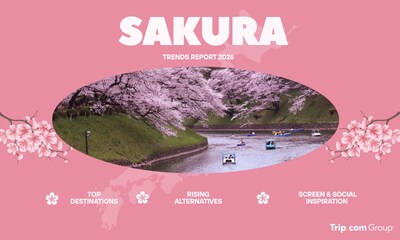
New booking insights from Trip.com Group reveal that while Japan's classic cherry blossom icons remain strong, travellers are increasingly choosing second-tier cities, alternative landscapes and media-featured destinations that promise a more cinematic and less crowded hanami experience.
The Cherry Blossom Edit: K-Drama Style
Part of this shift is being fuelled by screen tourism. The Trip.com Group Momentum Report reveals that over 70% of travellers make decisions based on what they see on screen.
For instance, Netflix's latest hit K-drama, Can This Love Be Translated? has spotlighted settings such as Kamakura and Enoshima, two coastal areas in Kanagawa that are about an hour away from Tokyo. Since the drama premiered, train bookings to Kamakura have risen by 66% month-on-month, while hotel bookings and searches for the destination have increased by 55%[1].
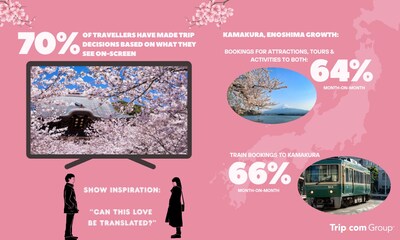
Interest in experiences across the region is also climbing, with bookings for attractions, tours and activities in Kamakura and Enoshima increasing by 64% month-on-month[2]. Enoshima combines ocean views, shrine pathways and early blooming Kawazu-zakura. The result is a softer alternative to the capital's peak-season intensity.
However, notably, icons like Shinjuku Gyoen National Garden continues to rank No.1 globally for sakura-related attraction bookings, reaffirming Tokyo's enduring appeal even as travellers diversify their itineraries.
K-dramas have also reshaped blossom travel across their home base of South Korea. The classic Winter Sonata turned Nami Island into a romantic springtime icon, while Yeouido Hangang Park, featured in hits like Squid Game, The King: Eternal Monarch and The Penthouse has cemented its status as Seoul's go-to hotspot each spring.
In essence, travellers are no longer just asking, "When is sakura season?" but "Where can I experience it differently?"
The Rise of "Second-City Sakura"
As more travellers tire of shoulder-to-shoulder crowds in major capitals, a clear pivot to secondary cities is also emerging.
While Japan's Golden Route of Tokyo, Osaka, Kyoto continue to dominate with more than two-thirds of all sakura-related bookings in the top ten Japanese cities, nearly 1 in 3 bookings are now heading beyond this classic corridor[3].
Interest in these secondary destinations is accelerating rapidly. While Tokyo's bookings grew 31.5% YoY, cities like Sendai (+89.7% YoY), Sapporo (+56.2% YoY), and Fukuoka (+54.9% YoY) are outpacing that with faster-paced growth rates.
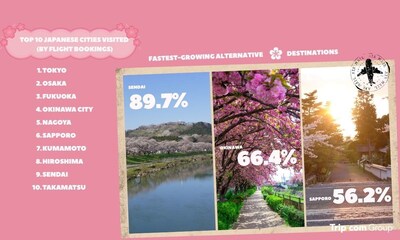
This trend marks the rise of "Second-City Sakura": destinations that offer equally stunning blooms, but with fewer crowds and off-the-beaten track experiences.
Where Travellers Are Looking Instead
Across Japan, these alternative cherry blossom destinations are gaining traction:
- Sendai – +89.7% YoY. The riverside stretch between Funaoka and Ogawara along the Shiroishi River (mid-April) forms a pastel tunnel of sakura, often far less crowded than urban parks.
- Okinawa City – +66.4% YoY, offering subtropical early blooms for travellers seeking warmer alternatives.
- Minamitsuru District – +23.6% YoY, pairing stunning Fuji views with lakeside hanami experiences.
- Sapporo – +56.2% YoY, extending the sakura season into early May.
- Fukuoka – +54.9% YoY, combining coastal charm with vibrant local culture.
Nagoya (+22.1% YoY), Naha (+27.6% YoY) are also recording steady gains as travellers distribute themselves more widely across the country.
Sakura Beyond Japan: A Regional Bloom Boom
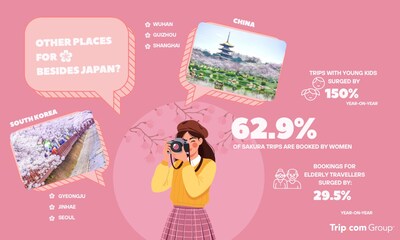
While Japan remains synonymous with cherry blossoms, sakura travel is increasingly regional. South Korea and China rank among the top five destinations searched globally for cherry-blossom related keywords.
South Korea's Scenic Alternatives
- Gyeongju – The ancient capital offers temple-lined streets and serene lakeside blossom views.
- Jinhae – Famous for its riverside blossom tunnels and South Korea's largest cherry blossom festival.
- Seoul – Urban-accessible clusters, including Namsan Mountain Park, provide highly photogenic settings that are especially popular on social media.
- Jeju Island – A natural escape featuring island landscapes adorned with seasonal sakura.
Significantly, Gyeongju and Jeju have accelerated flight booking growth rates of around 207% and 143% year-on-year respectively[4], indicating high interest.
China's Expanding Sakura Map
China's sakura destinations are rapidly gaining attention among travellers seeking both natural beauty and cultural experiences.
- Guizhou – Once known primarily for its ethnic-cultural tourism, Guizhou has emerged as a cherry blossom hotspot, with Pingba Cherry Blossom Park among the most booked tours on the Trip.com Group platform.
- Wuhan – Urban blossoms flourish at university campuses and East Lake Cherry Blossom Park, attracting visitors seeking city-friendly sakura experiences.
- Shanghai – Jing'an Sculpture Park combines modern art installations with seasonal blooms, offering a unique visual experience.
Here, lakeside and garden-style spots dominate traveler searches, reflecting a preference for scenic, walkable locations.
Traveller Demographics
Globally, 62.9% of sakura trips are booked by female travellers, with the majority aged 25–49, accounting for over half of all bookings[5]. There is also notable growth among other age groups: bookings for travelers over 60 have grown 29.5% year-on-year, while trips with young children have surged 150% year-on-year.
This regional bloom boom highlights how cherry blossom tourism is expanding in diversity and appeal, blending natural beauty, cultural experiences, and social media appeal to create new seasonal travel trends across Asia.
About Trip.com Group
Trip.com Group is a global travel service provider comprising of Trip.com, Ctrip, Skyscanner, and Qunar. Across its platforms, Trip.com Group helps travellers around the world make informed and cost-effective bookings for travel products and services and enables partners to connect their offerings with users through the aggregation of travel-related content and resources, and an advanced transaction platform consisting of apps, websites and 24/7 customer service centres. Founded in 1999 and listed on NASDAQ in 2003 and HKEX in 2021, Trip.com Group is on the mission "to pursue the perfect trip for a better world". Find out more about Trip.com Group here: group.trip.com.
Follow us on: X, Facebook, LinkedIn, and YouTube.
[1] Based on Trip.com Group's booking data from 16 January to 27 February 2026. |
[2] Based on Trip.com Group's booking data from 16 January to 27 February 2026. |
[3] Based on Trip.com Group's flight booking data from 20 March to 3 May 2026, and 22 March to 1 May 2025 |
[4] Based on Trip.com Group's flight booking data from 20 March to 3 May 2026, and 22 March to 1 May 2025 |
[5] Based on Trip.com Group's flight booking data from 20 March to 3 May 2026, and 22 March to 1 May 2025 |

 View original content to download multimedia:https://www.prnewswire.com/news-releases/from-k-drama-to-second-city-sakura-how-travellers-are-rethinking-cherry-blossom-season-in-2026-302717208.html
SOURCE Trip.com Group

