Tallmadge, Ohio, March 06, 2026 (GLOBE NEWSWIRE) -- This article contains affiliate links. If a purchase is made through these links, a commission may be earned at no additional cost to the buyer. This article is an informational overview and does not constitute medical, health, or dietary advice. All product details described below are stated as presented by the company and should be verified directly on the official website before any decision.
In this report, the term "effectiveness" refers strictly to how Mind Vault's marketing language describes potential outcomes. It does not indicate that the finished product has been clinically proven effective, and no published clinical trial appears to evaluate Mind Vault as a proprietary formula. This report is intended as an informational analysis of publicly available product claims, ingredient research context, and consumer disclosure considerations.
Growing Consumer Interest in Cognitive Support Supplements
Many adults over 45 report growing interest in cognitive wellness topics as they begin researching memory support, mental clarity, and age-related changes in focus. These concerns are common, and they drive millions of consumer searches each month across wellness platforms and supplement research sites.
Consumer searches related to brain supplements, memory vitamins, and nootropic ingredients have expanded steadily as the population ages and more adults look for ways to support long-term cognitive wellness. The global brain health supplement market continues to grow, driven by adults who want to stay sharp, independent, and mentally engaged well into their later decades.
That search is what brings most people to products like Mind Vault — a dietary supplement positioned specifically for adults 45 and older who are navigating age-related changes in memory, focus, and mental clarity. The product has generated steady consumer interest across wellness platforms, brain health forums, and supplement research searches.
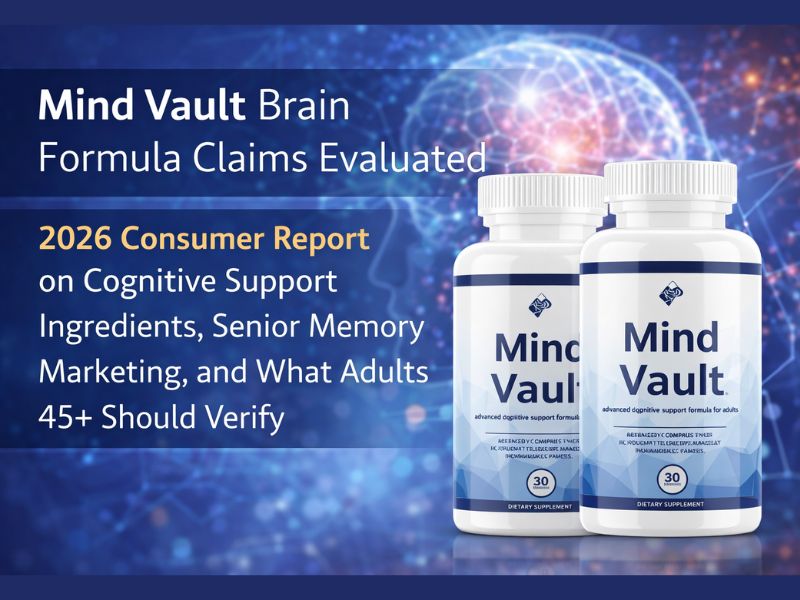
Consumer interest and clinical evidence are not the same standard, which is why this report distinguishes between product marketing, ingredient-level research, and finished-product testing. The goal is to provide verified context so readers can better understand the product's marketing, ingredient research background, and disclosure considerations.
Current product details, pricing, and terms can be confirmed on the official website. View the current Mind Vault offer (official Mind Vault page).
Individual results vary. Dietary supplements are not substitutes for balanced nutrition, regular physical activity, or professional medical guidance. Consult a qualified healthcare provider before starting any new supplement regimen.
What Is Mind Vault
According to the official website, Mind Vault is a premium cognitive support supplement specifically formulated for adults 45 and older. The company describes it as a formula designed to support memory retention, mental clarity, and healthy brain function during aging. The supplement is sold as a once-daily capsule — one capsule per day, one bottle per month — and positioned as a non-stimulant alternative to general-purpose nootropics that do not account for how the brain changes after midlife.
The company's published product information states that Mind Vault is manufactured in the United States in an FDA-registered facility. The website describes the formula as containing clinically researched ingredients formulated specifically for seniors.
Purchases are processed through BuyGoods, identified on the website as a registered trademark of a Delaware corporation. The site includes a disclosure noting that BuyGoods' role as retailer does not constitute an endorsement, approval, or review of the product or any claims used in its promotion.
The product is attributed to "Dr. Charles Miller." The company's own fine print includes important context about that name, which is discussed later in this report. It is worth understanding before evaluating the authority claims in the marketing materials.
Mind Vault Marketing Claims vs. Ingredient Research
The following distinction is central when evaluating any supplement — and it applies across the entire industry, not just to Mind Vault.
Many supplement companies reference research conducted on individual ingredients. This does not necessarily indicate that the finished multi-ingredient formula has been evaluated in controlled clinical trials. There is an important distinction between formulas that contain studied ingredients and formulas that have themselves been evaluated as finished products.
Mind Vault's marketing positions the supplement around three central promises: enhanced memory retention, improved mental clarity, and long-term neuroprotection. The website states the formula works by enhancing neurotransmitter production, improving cerebral circulation, and providing antioxidant protection against free radical damage.
The website references that the product contains clinically researched ingredients. That phrase means individual compounds in the formula have been studied in published research. It does not mean Mind Vault as a finished, multi-ingredient supplement has been tested through independent clinical trials. As of this writing, no published clinical trial appears to have evaluated Mind Vault as a proprietary formula.
This is ingredient-level research context; Mind Vault as a finished product has not been clinically studied as a complete formulation. These individual findings do not mean Mind Vault replaces prescribed treatment.
Ingredient Research Context
The following section examines what is actually in the formula and what published research says about each compound individually. This is what the science shows about these ingredients on their own, at specific dosages, under controlled conditions. It is not a statement about what Mind Vault as a finished product will do for any individual consumer.
Bacopa Monnieri — The company describes this as a time-honored herb supporting memory formation and retention. Published research examining this ingredient has reported potential improvements in memory acquisition and retention under controlled study conditions. A 2014 meta-analysis published in the Journal of Ethnopharmacology reviewed nine studies and found that Bacopa Monnieri may have potential to improve cognition, particularly speed of attention. Most positive studies used standardized extracts at dosages of 300 to 600 mg daily over periods of 8 to 12 weeks. The specific Bacopa dosage in Mind Vault is not individually disclosed on publicly available labeling.
Alpha GPC — The company describes this as a premium choline compound that crosses the blood-brain barrier to increase acetylcholine production, supporting memory, learning, and cognitive processing. Published research does support Alpha GPC as a highly bioavailable choline source. Clinical studies examining cognitive effects have typically used dosages of 400 to 1,200 mg daily. Alpha GPC is among the choline compounds frequently discussed in published cognitive support research. The specific amount in Mind Vault is not individually disclosed.
Phosphatidylserine — Described by the company as supporting memory, cognition, and nerve cell health as we age. Published research includes studies suggesting potential benefits for age-related cognitive changes, including a 2015 review in the journal Nutrients that examined its role in brain cell membrane integrity. Most clinical trials used dosages of 100 to 300 mg daily. The specific amount in Mind Vault is not disclosed.
Huperzine A — The company describes this as a powerful acetylcholinesterase inhibitor that helps maintain optimal acetylcholine levels. This is the ingredient with the strongest pharmacological profile in the formula. Huperzine A has been studied for its acetylcholinesterase-inhibiting activity, a mechanism that warrants healthcare-provider review for adults using medications affecting cholinergic pathways. It blocks the enzyme that breaks down acetylcholine, effectively allowing more of this memory-critical neurotransmitter to remain active in the brain. Published research includes clinical trials reporting potential memory benefits in populations with age-related cognitive changes. Because of this pharmacological mechanism, healthcare provider consultation is particularly important for adults taking any medications that affect cholinergic pathways.
L-Theanine — The company describes this as promoting calm alertness by increasing alpha brain waves. Published research supports L-Theanine's ability to promote relaxed focus without drowsiness, particularly when combined with caffeine. Studies have typically used 100 to 200 mg doses. It is among the ingredients in the formula frequently noted for its tolerability profile in published research.
GABA (Gamma-Aminobutyric Acid) — Described by the company as a calming neurotransmitter that helps regulate brain activity. GABA is indeed the brain's primary inhibitory neurotransmitter. However, there is a legitimate scientific question about oral GABA supplementation: published research remains divided on whether orally supplemented GABA effectively crosses the blood-brain barrier in meaningful quantities. Some studies suggest peripheral effects on relaxation, while the central nervous system impact of oral GABA supplements continues to be debated in peer-reviewed literature. This means the mechanism and extent of any potential benefit from oral GABA supplementation remain areas of ongoing scientific discussion.
L-Tyrosine — The company describes this as a precursor to dopamine and norepinephrine. Published research supports L-Tyrosine's role in neurotransmitter precursor pathways. Studies have examined its potential benefits under conditions of acute stress or sleep deprivation, with some showing cognitive benefits in those specific contexts. Evidence for general cognitive enhancement in well-rested, healthy adults is less established.
Caffeine — Listed as enhancing alertness and mental energy. Caffeine has been extensively studied as a cognitive compound, with robust evidence supporting short-term improvements in attention and processing speed. The specific dosage per capsule is not disclosed on the Mind Vault label. The company simultaneously markets the product as formulated for seniors who may have increased sensitivity to stimulants — making caffeine dosage transparency particularly relevant for this target demographic.
Niacin (Vitamin B3) — According to the company, this supports healthy blood flow to the brain and helps convert food into energy. Published research supports niacin's role in cellular energy metabolism and vascular health. The National Institutes of Health recognizes niacin as essential for nervous system function.
Vitamin B6 — The company states this vitamin is essential for production of key neurotransmitters. Published research confirms Vitamin B6's role in neurotransmitter synthesis, including serotonin, dopamine, and GABA. Deficiency has been associated with cognitive decline in aging populations in observational studies.
Each of these ingredients has published research at the individual compound level. The question many consumers may wish to examine is whether Mind Vault delivers each ingredient at the dosages used in those studies — and that brings us to the next section.
The Dosage Transparency Question
This is where things get practical. Individual ingredients in Mind Vault have real research behind them. But here is what every consumer evaluating supplements should understand: ingredient research and dosage research are inseparable.
A study reporting memory-related findings for Bacopa Monnieri at 300 mg daily does not tell you anything about a product that contains an undisclosed amount of Bacopa. A study on Alpha GPC at 400 mg has no bearing on whether a given formula delivers 400 mg, 200 mg, or 50 mg. The same logic applies to every ingredient on the label.
Mind Vault's website lists ingredients and describes their functions but does not provide milligram-level disclosure for each individual active ingredient in the formula. Without individual ingredient dosage disclosure, it is not possible to independently verify how the formula compares to research conditions described in published studies.
This is not uncommon in the supplement industry. Many products — including many products in the category — limit dosage disclosure. But if comparing ingredient dosages against published research ranges is important to how consumers evaluate supplements, the current level of publicly available dosage information may not be sufficient for that comparison. Contacting the manufacturer directly for this information before making any decision is a reasonable step.
The "Dr. Charles Miller" Attribution
Mind Vault's marketing prominently features "Dr. Charles Miller" as the authority figure behind the product. He is referenced in the money-back guarantee section and positioned as a knowledgeable figure connected to the formula's development.
The company's own fine print includes an important disclosure. According to the website's disclaimer section, Dr. Charles Miller is described as a real researcher at Mind Vault whose name has been changed for privacy.
This means the person presented as the product's authority figure may exist but operates under a pseudonym. There could be perfectly legitimate privacy reasons for this. But practically speaking, a pseudonymous authority figure cannot be independently verified through public professional databases, medical board registries, or published academic records.
This is worth factoring into any evaluation — not as an accusation, but as a transparency consideration when deciding how much weight to give the authority positioning in the marketing.
Testimonials and Marketing Disclosures
The official website includes customer testimonials describing outcomes such as improved memory recall, sharper cognitive function, and enhanced participation in daily activities. These testimonials are attributed to named individuals with ages and labeled as "Verified Purchase."
The website's disclaimer section includes disclosures worth reading carefully. According to the company's published fine print, testimonials are described as real customer reactions with names changed for privacy. The disclaimer further states that individual results may vary.
For context as a reader: the people quoted may be real customers, but their names are not their real names, and the company itself states that these results are not necessarily what every consumer should expect. Testimonials represent individual experiences from self-selected satisfied customers — people who had positive experiences are more likely to share feedback than those with neutral or negative outcomes.
The website also includes the standard FDA supplement disclaimer confirming that statements have not been evaluated by the Food and Drug Administration and that the product is not intended to diagnose, treat, cure, or prevent any disease.
Scientific Research on Brain Health Nutrients
Understanding why cognitive supplements contain certain ingredients requires a quick look at what actually changes in the brain as we age. This context helps you evaluate any brain supplement — not just Mind Vault.
Acetylcholine and memory. Acetylcholine is the neurotransmitter most directly associated with memory formation and recall. Production naturally declines with age, which is one reason ingredients like Alpha GPC and Huperzine A appear in cognitive formulas — they target acetylcholine availability through different mechanisms. Published research examining acetylcholine-supporting compounds has shown potential benefits for age-related cognitive changes, though results vary across study populations.
Oxidative stress and neuroprotection. The brain is particularly vulnerable to oxidative damage because it consumes a disproportionate share of the body's oxygen. Over time, free radical accumulation can damage neuronal membranes and interfere with cellular communication. Antioxidant compounds like those found in Bacopa Monnieri and other botanical extracts are studied for their potential to support neuronal integrity against this damage.
Cerebral blood flow. Healthy blood flow delivers oxygen and nutrients to brain tissue. Age-related changes in vascular function can reduce this delivery, contributing to mental fatigue and slower processing speed. Several ingredients in nootropic formulas — including niacin and ginkgo biloba — are studied for their potential to support healthy circulation, though Mind Vault does not list ginkgo among its ingredients.
Neurotransmitter balance. Beyond acetylcholine, dopamine and norepinephrine play roles in motivation, alertness, and executive function. Precursor compounds like L-Tyrosine are included in cognitive formulas to provide raw materials for neurotransmitter synthesis, though the relationship between oral supplementation and brain neurotransmitter levels involves multiple metabolic steps.
This scientific context is useful because it helps consumers evaluate whether a supplement's ingredient list aligns with established mechanisms of cognitive support — and where the research is strong versus where it is still developing.
Why Adults Over 45 Explore Cognitive Support
The audience Mind Vault targets — adults 45 and older — is not imagining these changes. Age-related shifts in cognitive function are well-documented in published research. After midlife, many adults begin noticing changes that include difficulty retrieving words or names, reduced ability to maintain focus during extended tasks, slower processing speed, increased mental fatigue during complex or multistep activities, and less efficient formation of new memories.
These changes are driven by measurable biological processes: declining neurotransmitter production, reduced neuroplasticity, decreased cerebral blood flow, and accumulated oxidative stress on brain cells. They are a normal part of aging — not a disease — but that does not make them any less noticeable when they show up in daily life.
This is the gap that cognitive supplements aim to address. The category appeals to adults who want to take a proactive approach to brain health without waiting for a clinical diagnosis. Whether supplementation is the right approach for any individual depends on factors including baseline cognitive health, existing medications, dietary intake, lifestyle habits, and individual biology. A healthcare provider who knows your specific situation is always the most reliable starting point.
How Consumers Evaluate Brain Supplements
For consumers comparing cognitive supplements — whether Mind Vault is on the list or not — here are the factors that informed consumers typically weigh. These apply broadly across the category.
Ingredient transparency. Does the label disclose individual ingredient dosages, or does it use a proprietary blend structure? Full-disclosure labeling allows you to compare each ingredient against published research dosages. Proprietary blends protect trade secrets but limit your ability to evaluate dosing.
Research alignment. Do the ingredients have published peer-reviewed research behind them? Are the research dosages comparable to what the product delivers? Ingredient research and dosage research are inseparable — knowing an ingredient was studied at 300 mg does not help evaluate a product that may contain a fraction of that amount.
Clinical evidence level. Has the finished product been tested through independent clinical trials, or are research claims based on individual ingredient studies? Ingredient-level evidence is the industry standard for most supplements. Product-level clinical trials represent a higher evidence standard that few supplements achieve.
Manufacturing standards. Is the product manufactured in a GMP-compliant facility? Is the facility FDA-registered? These relate to manufacturing quality controls, not product efficacy claims.
Authority verification. Can the experts or researchers referenced in marketing materials be independently verified through public professional records? Pseudonymous authority figures limit independent verification.
Refund protection. What is the guarantee period? What are the return requirements? Who pays return shipping? Understanding these terms in advance provides clarity on the consumer's level of financial protection.
These criteria are not about finding the "best" supplement — they are about making an informed decision based on what can actually be verified.
How the Product Is Positioned for Different Consumer Preferences
According to the product's marketing and publicly available information, Mind Vault appears to be positioned toward adults seeking a multi-ingredient cognitive support formula designed for aging-related wellness considerations.
The product's positioning may be most relevant to adults who prioritize:
Multi-ingredient cognitive formulas over single-compound supplements: The formula combines ten active ingredients targeting different aspects of cognitive function — neurotransmitter support, neuroprotection, circulation, and calm focus. This structure is designed around broad-spectrum coverage rather than isolated compounds.
A non-prescription daily approach to age-related cognitive maintenance: For adults who are not currently experiencing diagnosed cognitive conditions but are exploring nutritional support for normal age-related changes in memory and focus, Mind Vault positions itself as a daily wellness supplement rather than a treatment.
Senior-specific formulation: The product is explicitly designed for adults 45 and older, which may mean ingredient selection and dosing decisions were made with aging physiology in mind — though without full dosage disclosure, this cannot be independently confirmed.
Adults evaluating this category may also wish to consider whether they require:
Full dosage transparency: If comparing ingredient dosages against published research ranges is a priority, the current level of publicly available dosage disclosure may be insufficient for this comparison.
Healthcare provider consultation before starting cholinergic compounds: The inclusion of Huperzine A, which has been studied for its acetylcholinesterase-inhibiting activity, makes professional medical consultation essential for adults using medications that affect cholinergic pathways.
Gradual timelines aligned with expectations: The company's FAQ suggests improvements develop gradually over weeks to months. Adults expecting immediate cognitive effects may find this timeline does not match their preferences.
Questions consumers may wish to consider when evaluating cognitive supplements:
Have you discussed cognitive health concerns with a qualified healthcare provider? Are you currently taking any medications that could interact with cholinergic compounds? Do you prioritize full dosage transparency when evaluating supplements? Are your expectations aligned with what published research describes as gradual, modest cognitive support rather than dramatic overnight changes? These considerations may help clarify which cognitive supplement characteristics are most relevant to any individual situation.
Company-Published Pricing Information
According to pricing information published on the official website at the time of this report, Mind Vault is presented in multiple supply options:
According to the company, a 6-bottle package (180-day supply) is listed at approximately $38 per bottle with free U.S. shipping and three bonus guides included. A 3-bottle package (90-day supply) is listed at approximately $58 per bottle with free U.S. shipping and three bonus guides. A 2-bottle package (60-day supply) is listed at approximately $68 per bottle plus $9.95 shipping.
All purchases are described as one-time payments processed through BuyGoods. The website does not indicate any subscription or automatic rebilling structure.
Pricing and availability can change, so readers should verify current terms. View the current Mind Vault offer (official Mind Vault page).
Refund Policy and Customer Support
According to the company's published refund policy, purchases are covered by a 60-day money-back guarantee. The policy states that consumers who are unsatisfied within 60 days of purchase can request a full refund.
For physical product returns, the company requires products to be sent back by mail to an address in Tallmadge, Ohio. According to the published terms, return shipping costs are the responsibility of the buyer. The company states that refund requests must come no later than 365 days after the product was shipped, though the guarantee window itself is described as 60 days.
The guarantee language on the sales page uses strong phrasing — the company states buyers will receive back every penny with no questions asked. The practical terms on the returns page include conditions that may be useful for consumers reviewing return-policy conditions in advance, including the return shipping cost responsibility and the mail-in return requirement.
Refund questions can be directed to support@getmindvault.com.
Consumer Verification Checklist
Verify individual ingredient dosages. Full-disclosure labeling allows consumers and healthcare providers to compare dosages against published research. If exact amounts for each ingredient are not publicly available, contacting the manufacturer directly for clarification is a reasonable step.
Separate ingredient research from product research. Mind Vault contains ingredients that have been individually studied in published research. The finished multi-ingredient formula has not been evaluated through independent clinical trials. Knowing the difference helps set realistic expectations.
Evaluate authority claims independently. The product's primary authority figure operates under a disclosed pseudonym according to the company's own fine print. Consider how you weigh authority claims that cannot be independently verified through public professional records.
Read the testimonial disclaimers. The website's fine print provides disclosures about testimonial naming and result typicality that are worth reading before forming expectations based on customer stories.
Confirm refund terms independently. Review guarantee terms, return requirements, shipping cost responsibility, and processing timelines directly on the official website before making any decision.
Talk to your healthcare provider. This is especially important for adults taking prescription medications — particularly any medications affecting cholinergic pathways — managing chronic conditions, or navigating age-related health changes. Professional medical guidance should come before any supplement purchase.
Consumer Questions About Mind Vault
Is Mind Vault FDA approved?
Mind Vault is a dietary supplement. Under current federal regulations, dietary supplements do not require FDA approval before being sold. The FDA does not evaluate supplement efficacy claims. The website states the product is manufactured in an FDA-registered facility, which relates to manufacturing standards rather than product approval. The product's own label includes the standard FDA disclaimer confirming these statements have not been evaluated by the Food and Drug Administration.
Are the ingredients in Mind Vault clinically researched?
Individual ingredients in the formula — including Bacopa Monnieri, Alpha GPC, Phosphatidylserine, and Huperzine A — have been studied in published peer-reviewed research. However, these studies examined individual compounds at specific dosages under controlled conditions. No published clinical trial appears to have tested Mind Vault's complete multi-ingredient formula as a finished product. The phrase "clinically researched ingredients" refers to ingredient-level evidence, not product-level clinical testing.
Is Mind Vault safe for seniors who take other medications?
According to the company's FAQ, Mind Vault is formulated with natural ingredients that are generally well-tolerated by seniors. The company recommends consulting with a healthcare provider before starting, especially for adults who take prescription medications or have existing health conditions. The inclusion of Huperzine A, which has been studied for its acetylcholinesterase-inhibiting activity, makes this consultation particularly important for adults using medications that affect acetylcholine or cholinergic pathways.
How long does it take to notice changes with Mind Vault?
According to the company's published FAQ, most senior users report noticing improvements in mental clarity within the first 2 to 3 weeks, with more significant memory benefits developing over 3 to 6 months of consistent use. These timelines represent what the company states and should be understood as general estimates, not guaranteed outcomes. Individual timelines depend on factors including baseline cognitive health, dietary habits, sleep quality, and physical activity.
Who is Dr. Charles Miller?
According to the website's disclaimer section, Dr. Charles Miller is described as a real researcher at Mind Vault whose name has been changed for privacy. This means the authority figure presented in marketing materials operates under a pseudonym. Independent verification of credentials through public professional databases is not possible under this arrangement.
What does "FDA-registered facility" mean?
An FDA-registered facility is a manufacturing location that has registered with the FDA as required by federal law. Registration means the facility is subject to FDA inspection. It does not mean the FDA has reviewed, approved, or endorsed any specific product manufactured at that location.
What is the difference between "clinically researched ingredients" and a clinically tested product?
"Clinically researched ingredients" means individual compounds in the formula have been studied in published scientific research. A clinically tested product would mean the finished multi-ingredient formula was evaluated through controlled clinical trials. Mind Vault uses the former claim. No published clinical trial appears to have tested the finished Mind Vault formula as a complete product.
Where is Mind Vault sold?
According to the company, Mind Vault is available exclusively through the official website at getmindvault.com. Purchases are processed through BuyGoods. The website includes a counterfeit warning advising consumers to avoid purchasing from other platforms, describing unauthorized products as potentially dangerous counterfeits.
Are the testimonials on the Mind Vault website real?
According to the company's disclaimer, testimonials are described as real customer reactions with names changed for privacy. The disclaimer also states that individual results may vary. These disclosures are worth reading before relying on testimonial content to form expectations.
Contact Information
For questions about the product or related inquiries, according to the company's website, Mind Vault offers customer support through the following channels:
Phone: (302) 200-3480
Hours: Monday to Friday, 10 AM to 7 PM EST
Email: support@buygoods.com
Product Return Address: 285 Northeast Ave Tallmadge, Ohio 44278
View the current Mind Vault offer (official Mind Vault page)
Additional Consumer Research
Consumers researching Mind Vault may benefit from reviewing previously published independent reporting on this product. A 2025 consumer report examining Mind Vault's senior cognitive health formulation and age-focused innovation provides additional context on the product's ingredient composition and cognitive health positioning. A separate earlier report covering Mind Vault's launch as a cognitive support supplement for adults 45 and older offers background on the product's initial market entry and stated formulation goals.
Independent research across multiple consumer publications and peer-reviewed sources may provide broader perspective on cognitive supplements, nootropic compounds, and brain health support products. Evaluating multiple sources is recommended before making any decision. Consumers may also wish to review the FDA's general guidance on dietary supplement labeling and claims.
Summary of Key Considerations
Mind Vault is a dietary supplement that positions itself as a premium cognitive support formula specifically designed for adults 45 and older. The product contains ingredients with published research at the individual compound level, including Bacopa Monnieri, Alpha GPC, Phosphatidylserine, and Huperzine A. However, individual ingredient dosages are not fully disclosed on publicly available labeling, and no published clinical trial has evaluated the finished product as formulated.
The product's primary authority figure operates under a disclosed pseudonym. Testimonials on the website are accompanied by disclaimers noting that names have been changed and that individual results may vary. The company provides a 60-day refund guarantee with a mail-in return requirement and buyer-paid return shipping.
Consumers who have completed their own research and want to review the full product details can do so. Complete product details, current pricing, and published terms are available. View the current Mind Vault offer (official Mind Vault page).
This article is for informational purposes only and does not constitute medical advice. Always consult a qualified healthcare professional before starting any new supplement regimen, especially if you take prescription medications, have existing health conditions, or are managing age-related health changes. Supplements are not intended to diagnose, treat, cure, or prevent any disease.
Disclaimers
FDA Health Disclaimer: These statements have not been evaluated by the Food and Drug Administration. This product is not intended to diagnose, treat, cure, or prevent any disease. Always consult your physician before starting any new supplement, especially if you have existing health conditions, take medications, or are pregnant or nursing.
Professional Medical Disclaimer: This article is educational and does not constitute medical advice. Mind Vault is a dietary supplement, not a medication. If you are currently taking medications, have existing health conditions, are pregnant or nursing, or are considering any major changes to your health regimen, consult your physician before starting Mind Vault or any new supplement. Do not change, adjust, or discontinue any medications or prescribed treatments without your physician's guidance and approval.
Results May Vary: Individual results will vary based on factors including age, baseline cognitive health, lifestyle factors, consistency of use, genetic factors, current medications, and other individual variables. While some customers report improvements, results are not guaranteed.
FTC Affiliate Disclosure: This article contains affiliate links. If you purchase through these links, a commission may be earned at no additional cost to you. This compensation does not influence the accuracy, neutrality, or integrity of the information presented. All opinions and descriptions are based on published research and publicly available information.
Pricing Disclaimer: All prices, discounts, and promotional offers mentioned were accurate at the time of publication (March 2026) but are subject to change without notice. Always verify current pricing and terms on the official Mind Vault website before making your purchase.
Publisher Responsibility Disclaimer: The publisher of this article has made every effort to ensure accuracy at the time of publication. We do not accept responsibility for errors, omissions, or outcomes resulting from the use of the information provided. Readers are encouraged to verify all details directly with Mind Vault and their healthcare provider before making decisions.
Ingredient Interaction Warning: Some ingredients in Mind Vault may interact with certain medications or health conditions. Huperzine A functions as an acetylcholinesterase inhibitor and may interact with cholinergic medications, anesthesia, and other drugs affecting acetylcholine pathways. Caffeine content may affect individuals with caffeine sensitivity. Always consult your healthcare provider before starting any supplement, especially if you take blood thinners, blood pressure medications, cognitive medications, or have any chronic health conditions.

Phone: (302) 200-3480 Hours: Monday to Friday, 10 AM to 7 PM EST Email: support@buygoods.com