
Wilder Auto Body has published an updated consumer guide to hail damage repair, expanding its September consumer information with a five-part framework for understanding how technicians evaluate storm-damaged vehicles and determine appropriate repair methods.
The updated resource organizes hail damage evaluation around five factors: dent characteristics, paint condition, panel accessibility, vehicle materials, and damage to surrounding exterior components. It also provides a clearer distinction between damage that may qualify for paintless dent repair and conditions that can require conventional auto body repair.
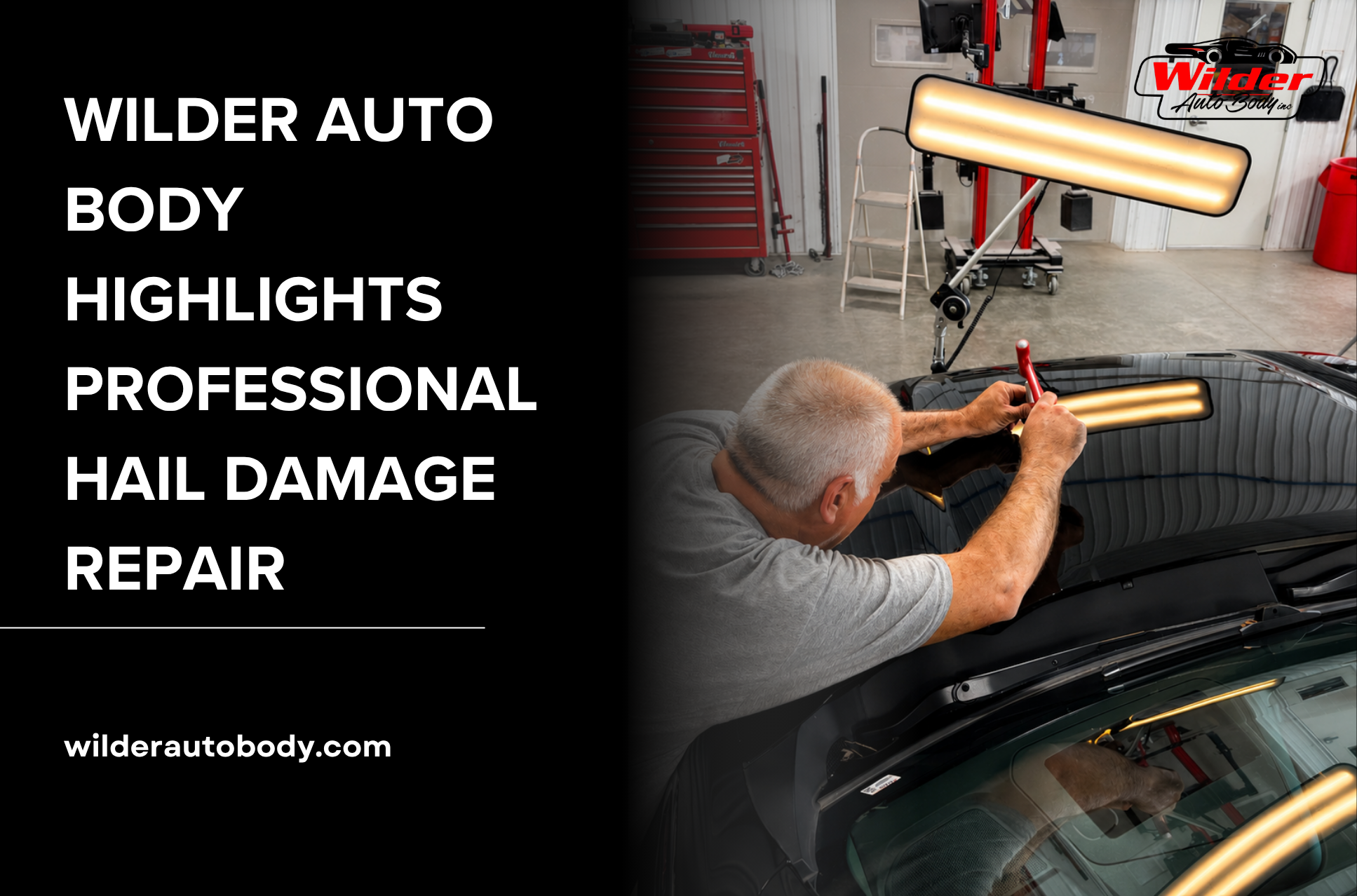
The September publication expands on Wilder Auto Body's existing hail repair information by focusing specifically on how repair decisions are made rather than simply describing available repair methods.
"Hail damage can look similar from one panel to another while presenting different repair considerations," a Wilder Auto Body representative said. "The updated information is designed to help vehicle owners understand what technicians evaluate before determining which repair method is appropriate."
Hailstorms can leave isolated dents or numerous impact marks across a vehicle's hood, roof, trunk, doors, fenders, quarter panels, and other exterior surfaces. Because those impacts can differ in depth, shape, location, and effect on the finish, technicians evaluate the documented condition of individual areas before establishing a repair plan.
The company's hail damage repair resource provides additional information about the overall evaluation and repair process.
One of the primary distinctions addressed in the updated guide is whether damage may qualify for paintless dent repair, commonly known as PDR.
Paintless dent repair can be considered for certain dents when conditions such as paint integrity, dent shape and depth, panel material, location, and accessibility are appropriate for the technique. The process is intended to restore qualifying areas without conventional body filler and refinishing.
Hail damage presents a useful example of why those conditions are evaluated individually. A storm can create multiple dents across several panels while affecting each area differently.
A shallow, accessible dent with an intact finish may present different repair considerations from a sharp impact, damaged paint, stretched material, or deformation near a panel edge or body line. For this reason, the presence or size of a hail dent alone does not establish whether PDR is appropriate.
Wilder Auto Body provides further information about qualifying damage through its paintless dent repair resource.
The September update also explains what can lead technicians to consider conventional auto body repair instead.
When damage does not meet the conditions for paintless repair, the repair plan can account for other appropriate procedures based on the affected component. Depending on the documented condition, this may include panel repair, surface preparation and refinishing, or replacement when applicable.
Paint condition is particularly relevant to this distinction. An impact that has cracked, chipped, or otherwise compromised the finish can present different requirements from a dent where the coating remains intact.
Accessibility is another factor highlighted in the updated guide.
Depending on where hail strikes a vehicle, headliners, interior trim, structural bracing, lamps, or other components may affect access to the damaged area. Vehicle construction can therefore influence which techniques are practical even when dents appear similar from the exterior.
The September publication adds further consumer context about panel materials as well.
Contemporary vehicles can incorporate different grades of steel, aluminum, plastics, and composite materials. Repair characteristics can vary among these materials, making component identification relevant when determining the procedures applicable to an affected area.
For vehicles containing aluminum components, Wilder Auto Body maintains additional information about aluminum repair.
The updated guide also encourages consumers to look beyond dents when documenting storm-related vehicle damage.
Depending on storm conditions, hail can affect glass, lamps, mirrors, moldings, trim, and other exterior components in addition to painted body panels. These areas can be documented separately so the repair plan reflects the vehicle's actual condition rather than treating every visible storm-related mark as dent damage.
Electronic equipment can also be positioned within or near exterior components. Cameras, sensors, antennas, wiring, and related technology vary by vehicle.
Their presence does not mean every hail-damaged vehicle requires scanning, calibration, or another electronic procedure. Whether additional technical operations apply depends on the affected equipment, work performed, vehicle configuration, and relevant manufacturer information.
Another clarification added to the September guide concerns the relationship between the initial hail assessment and the developed repair plan.
The initial evaluation establishes which areas show observable storm damage. Closer examination and appropriate access can then provide additional information about individual dents, panel construction, paint condition, and nearby components.
This progression can result in different repair methods appearing within the same repair plan. The distinction does not mean that the evaluation is inconsistent. It reflects differences among the documented conditions of individual affected areas.
The updated framework is intended to make that process easier for consumers to understand before repairs begin.
Vehicle owners can also photograph storm-related damage and record information about when the hail event occurred. These records can provide useful context when discussing the condition of the vehicle and reviewing repair documentation.
Wilder Auto Body's September publication does not establish that a particular dent or vehicle qualifies for PDR or another repair method without evaluation. Instead, the updated guide gives consumers a defined set of factors for understanding why hail repair recommendations can differ among panels, vehicles, and individual storm events.
By shifting the focus from a general description of hail repair services to a structured explanation of how repair methods are evaluated, the September update expands Wilder Auto Body's consumer education resources for vehicle owners dealing with storm damage.
About Wilder Auto Body
Wilder Auto Body is a family-owned auto body repair business serving Clay Center and surrounding Kansas communities. The company provides collision repair, auto body repair, paintless dent repair, hail damage repair, ADAS calibration, aluminum repair, towing, and related vehicle repair services.
###
For more information about Wilder Auto Body Inc, contact the company here:
Wilder Auto Body Inc
Kyle Wilder
(785) 632-3484
office@wilderautobody.com
138 E Crawford St, Clay Center, KS 67432
